Monday, July 17, 2006

I JUST COULDN'T HELP IT


I usually try to limit myself to updating this blog once a week. However, I could not let the 400th birthday of Rembrandt-- one of my favorite illustrators of all time-- go by without a gesture of respect.

Rembrandt illustrated stories from the Bible, Faust and other sources. Just like today's illustrators, he designed pictures for reproduction and popular consumption (using etchings, the most advanced technology of the day). Like today's illustrators, he was often frustrated by his tasteless and unreasonable clients. (At the height of the "tulip craze" in Amsterdam, a single tulip bulb sold for three times as much as Rembrandt's masterpiece, The Nightwatch.) And just like today's illustrators, he died broke.

But 400 years later, all the money squabbles and heartbreak and exasperation have faded into background noise, along with the names of all the investment bankers and merchants who were once such big shots in Amsterdam. All that's left is the sublime poetry of Rembrandt's pictures.


Read more "I JUST COULDN'T HELP IT..."

Sunday, July 16, 2006

David Gallaugher's grass-lined wheel


FOR
Excellent. Funny. Smart.
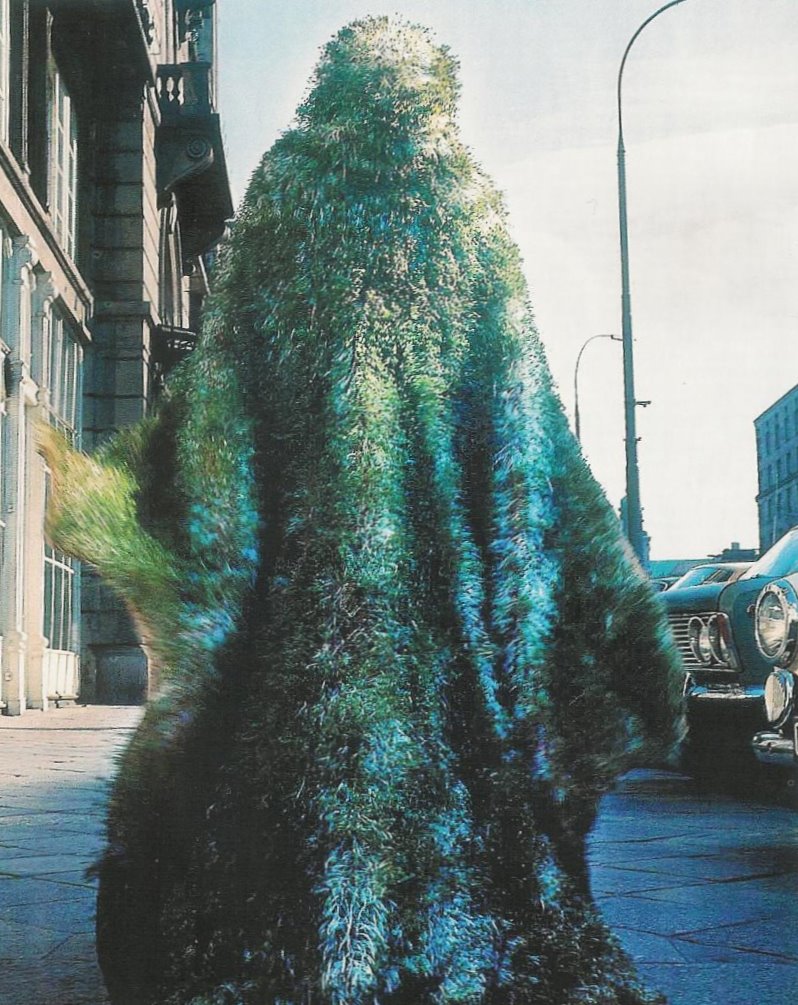
It's a brilliantly simple idea. It makes us think - and smile. It is all about ecology. And nature in the city. And taking a real break from all of this. And let's all live together like one happy family.
And above all - don't take it all too seriously. Because it's conceptual - i.e., it is about the concept more than it is about what comes out of its realization. Because it's unpretensious - i.e., it doesn't intend to change the world (at least not the whole world at once). Because it's pretty - i.e., it is a relief from all this...hmmm... down to earth thinking. Oh, and because they got to hear a lot of hamster jokes, apparently.

AGAINST
How do you know where you're going? How long is the grass going to last? So this is the version of nature that architecture students have for us? Don't ask what nature can do for you, but what you can do for nature.

BOTTOM LINE
I like it.
"Even in the Public Gardens [in Halifax, NS], you're not allowed to walk on the grass."
(which is a much better statement than another reported one: that they want to "draw attention to what he considers a North American obsession with manicured lawns.")

ALTERNATIVE
Teresa Murak, Procession (1974)

thank you Jan for the link!
UPDATE: The photo of the Grass Wheel is by Andre Forget, a Halifax-based photographer. I'm terribly sorry for not putting the credit before. It is often difficult to execute on the internet (to get to the original source), but it's mainly laziness, and not incapacity or bad will, that is to blame.
Read more "David Gallaugher's grass-lined wheel..."

Thursday, July 13, 2006

ALBERT DORNE


Albert Dorne had a wretched childhood. He was born in the slums of New York and grew up in poverty, suffering from tuberculosis, malnutrition and heart disease. Fatherless, he quit school after 7th grade to support his mother, two sisters and younger brother. He tried everything to feed his family, from selling newspapers on a street corner to prize fighting to working on a shipping dock.


One of the things I like about Dorne is that he had all the credentials for life as a thug, yet the siren song of art was stronger and pulled him through.


At age 10 Dorne began cutting school 3 or 4 days a week to sneak off to the Metropolitan Museum of Art where he taught himself to draw by copying almost every work of art in the place. The determined little boy soon became well known around the museum. Dorne lived in constant fear that his school would catch him, and he went to great lengths to cover his tracks. He later discovered that his teachers already knew what he was up to and had agreed not to turn him in. They admired his talent and ambition, and thought his chances were better at the museum than at school.

When he turned 17, Dorne decided to make his move into the art business:

"I went to a man who ran a one-man art studio and offered to work for nothing as an office boy while I learned the business. The 'nothing' as a salary sounded fine to him. But I still had to take care of my mother-- and by this time I was also married so I had two families to support. I worked in the studio six days a week from nine to six-thirty. Then I'd get home, have supper and a nap, and go back to work all night seven nights a week from midnight to eight in the morning as a shipping clerk... I did this for a whole year. Finally... I was made a full fledged artist with a salary. I was able to give up my night job. After almost a year of this, I decided I could make more money and perhaps find better work as a free lance artist."

Dorne went on to become one of the most popular illustrators in America, rich beyond his wildest dreams.


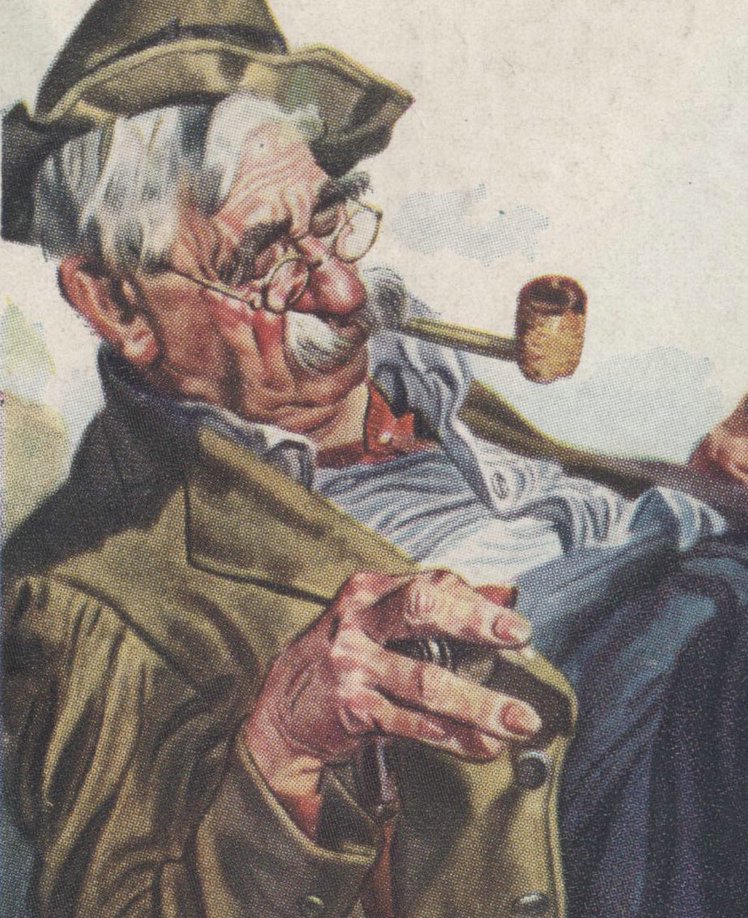
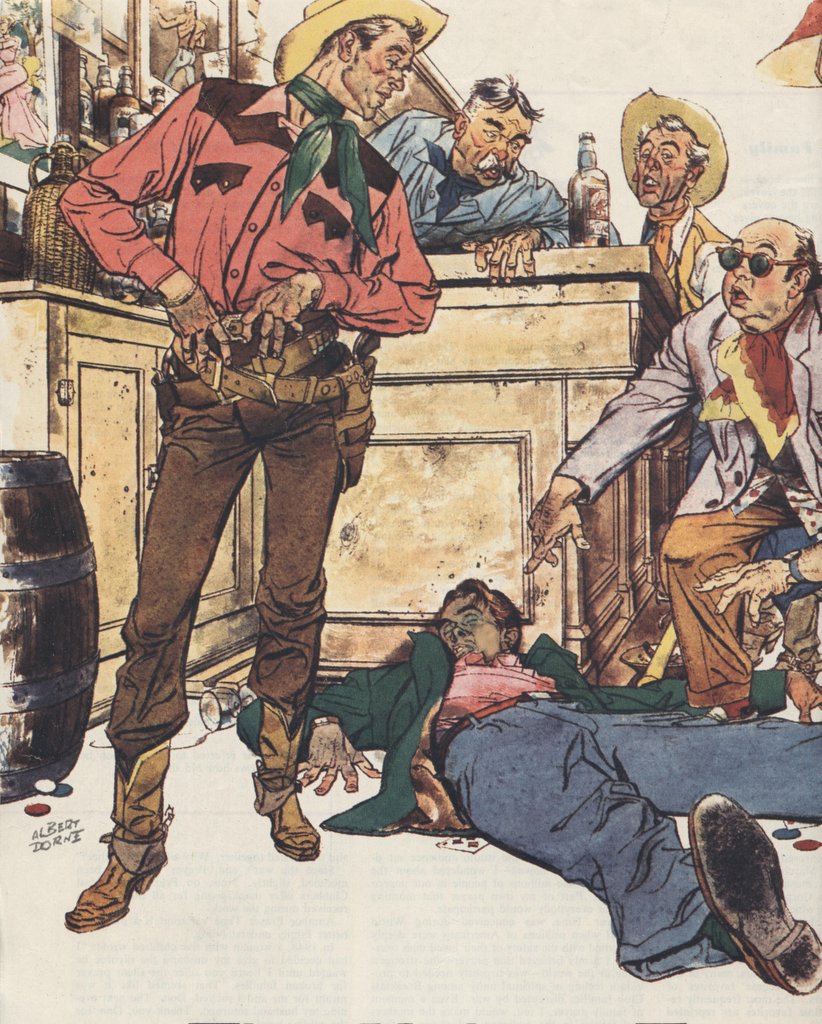
Dorne's traumatic childhood left him scarred. He drank heavily. Yet, the bee fertilizes the flower it robs. His experience endowed him with two great gifts. First, he developed a powerful survival instinct. Like a weed pushing its way up through the sidewalk, Dorne always hustled and found assignments when other illustrators lacked work. Second, growing up in a world of desperate, scruffy people Dorne developed a sharp eye for the human carnival. Note how Dorne's insightful line captures a riot of folds, lumps, wrinkles and patches in these marvelous drawings.


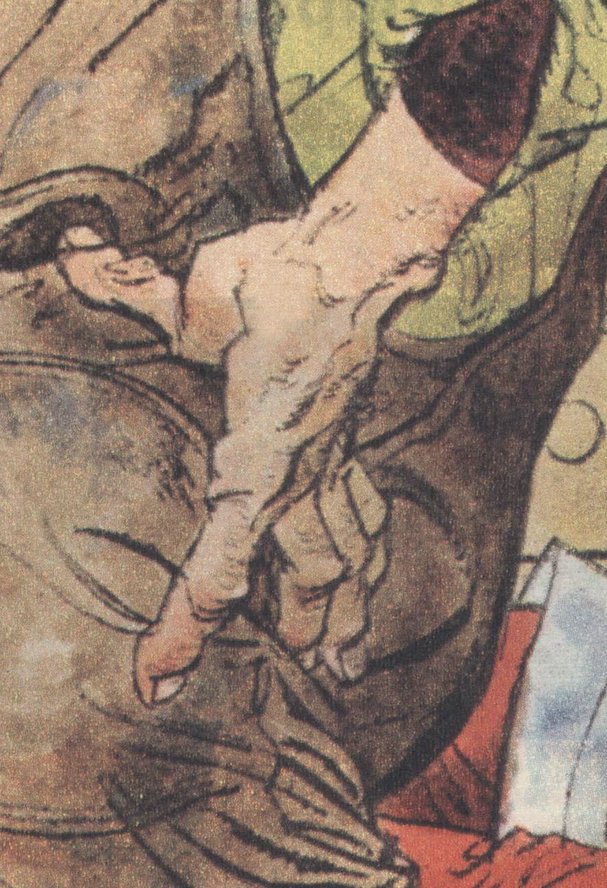
However damaged he may have been by his experiences in life, these drawings demonstrate that he never lost the unabashed joy of drawing. Look at the pleasure he took in drawing fanciful hands.


  Read more "ALBERT DORNE..."

Sunday, July 9, 2006

Installation for the soccer maniacs

Police in Berlin said on Wednesday they had arrested two men on suspicion of placing cement-filled soccer balls around the city and inviting people to kick them. At least two people injured themselves by kicking the balls, which were chained to lampposts and trees alongside the spray-painted message: "Can you kick it?"
I agree with ann that the message seems unnecessary, but the work does have a pleasant, sadistic thing about it. Especially if you're living in a country like Portugal.

(via, originally from) Read more "Installation for the soccer maniacs..."

How to concentrate on blogging?

Number 4 on the list of things to do in order to concentrate on writing is "Stop with the blog already". That puts the blog in a rather bad position, doesn't it? Read more "How to concentrate on blogging?..."

Friday, July 7, 2006

Romeo Castellucci and subjective criticism


It is not rare for me to come out of a show/performance/stage production and not know whether I liked it or not.
This was certainly the case with Romeo Castellucci's 4th episode of the Tragedia Endogonidia series - BR.#04 Bruxelles/Brussel, during the Alkantara Festival. And if I waited so long before writing anything, it was precisely because of that.
The state of I don't know is something to cherish. Whereas in everyday life it may be quite problematic, there is no reason for it not to persist in aesthetic judgement.
There is more. Contrary to many aesthetic theories, I firmly believe aesthetic judgement can change - and usually does! - after the aesthetic experience. We reevaluate what we saw, heard, felt, after thinking about it, but also, after receiving new information. That is why the conversations people have after shows are not, in my mind, just the need to share one's impressions. They are rather attempts at establishing some sort of relation between me, my view of things, and the way others see and feel them. And, since we are no monads, communication makes a difference. I've had shows which I didn't really appreciate but started to have liked after having discussions about them. This is probably quite natural in non-temporal arts, where we can come back to a piece and renegociate our relationship with it. But in time-based art it seems awkward, to say the least: how am I to have liked something I already didn't like when it took place? The "taking place" is what's misleading here. Things take place, but our judgement of them needn't stop when they do. Does this mean we are easily influenced? We can't make up our mind by ourselves? Yes. Isn't that great?
The problem is when we see something controversial, like Castellucci's production.

The theater, reportedly says Castellucci, is a space to show amazing events.
But what is "amazing"? Castelucci's amazing might actually come from a maze rather than from amazement. It is a dry, calculated construction, a sort of a post-Wilsonian theater of imagery. But where Robert Wilson opts for a sort of a postmodern surrealism, the Castellucci I've seen prefers semantic games with the "timeless themes": birth, death, violence, etc., directly going for the heavy-duty stuff. At the same time, his aesthetics is quite close to what we've seen in the Cremaster Cycle. The strong white light that's gloomy, the fantasy/mythological characters, the extreme slowness (they aren't only taking their time, but ours as well...), and what's most striking, the extreme ritualization of everyday activities. Actually, this passing onto the stage seems to be quite natural, as Cremaster had the performative and theatrical qualities that only maybe needed to be nourished with some sort of theater dynamics to make it a stage piece. Here, tragedy is what provides this dynamics. It raises the energy level, while keeping the aesthetics of unbearable purity unbearably pure. Castellucci's discovery here seems of some importance: you don't need the story to have the tragedy. Or do you? Although fighting away any clear narratives, BR#04 somehow goes back into them all the time: when a guard takes off his uniform, and lies nearly naked on the floor, to be beaten up by other guards, we get a very succint, but also very straight-forward story. More - it is actually a story with a moral! This is a crucial point that distinguishes Castelucci from Wilson or Barney. The latter two stay as far from moral, social or political issues as they can, while the Italian director goes directly into them. How does he survive? How does one survive combining a visual arts/ abstract world with dwelving into social matter? Cláudia Dias had one solution I particularly liked: being delicate and extremely personal while maintaining a rigid formal structure. Castelucci's structure is even more rigid and dry (almost lifeless!), but he chooses the exact opposite strategy to Dias: he becomes completely impersonal. The characters have absolutely nothing personal about them. The stories aren't stories, but flashes, hints of stories, sketches of narratives with a few grasping details. Thus, the "narratives" we see are at once complete - a guard undresses to become an anonymous person, who is thenupon abused by other guards - and inexistant - there is no reason for the abuse, no outcome, no difference between the people who beat and the one who is beaten, there is no beginning and no end, as the act of violence remains fairly similar throughout the scene. It is suspended, and we are allowed to link it to our entire imagination, memory... or not.
And this is where the roads diverge. Do we accept this game of suspended scenes and create the stories ourselves, or do we demand something more than just live paintings? Do we see the crawling old man dressed in a bikini as a beautiful, engimatic and sad image, or do we see it as a naive metaphor? Is gratuitous violence meaningful because it shows the lack of sense, or is it simply gratuitous and therefore senseless? Are the strange characters that appear somewhere in the middle fascinating, or just cheap decoration? Is the baby that is left crying alone on the stage a great act of provocation, using the tradition of live art, or is it an irritating act of going back to something that has already been done but with stupid cruelty and a pathetic atmosphere?
I really cannot answer these questions. When leaving the theater, I asked a few friends about their opinions. An young actress said it was disturbing and moving. A performer said it was the worst thing he had ever seen. A choreographer said it was absolutely beautiful. An older actor who used to work with Grotowski said it was simply a stupid show pour épater les bourgeois.

I continue to cherish my I don't know. Castellucci's is a great theater to have watched. Then again, I believe it was Mark Twain who defined a classic as a book people praise and don't read. At times, I wonder how important is the very experience of being there, live, when a work is so disciplined it sometimes seems to move from the ritual to the image of the ritual. Isn't the image enough, then? Is this why Castellucci's web page has no images?
more on Castelucci
Read more "Romeo Castellucci and subjective criticism..."

Thursday, July 6, 2006

ARTISTS IN LOVE, part three


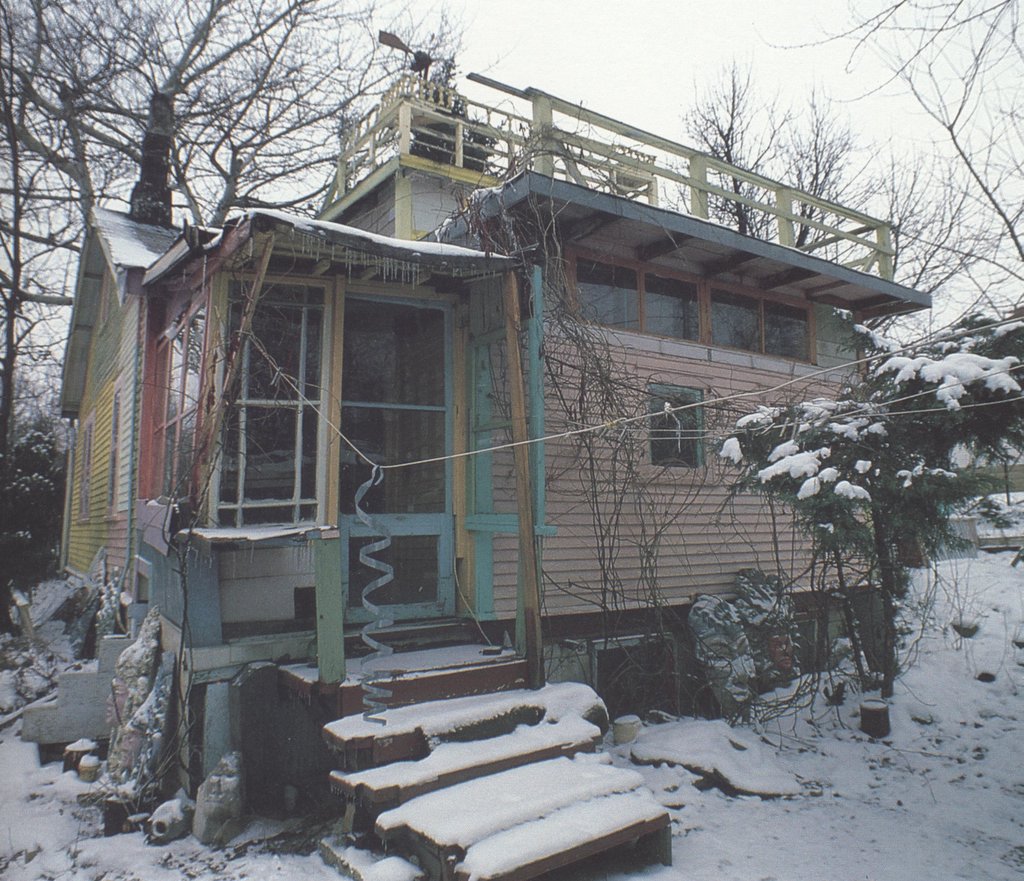
Eugene von Bruenchenhein (1910-1983) was a small, quiet man who worked the night shift at a bakery outside of Milwaukee, Wisconsin. He and his wife Marie lived a humble life in a tiny shack where Eugene spent all his spare time painting and writing poetry.


Eugene and Marie kept to themselves. The neighbors never guessed that inside their meager little home, Eugene and Marie lived as a god and goddess.


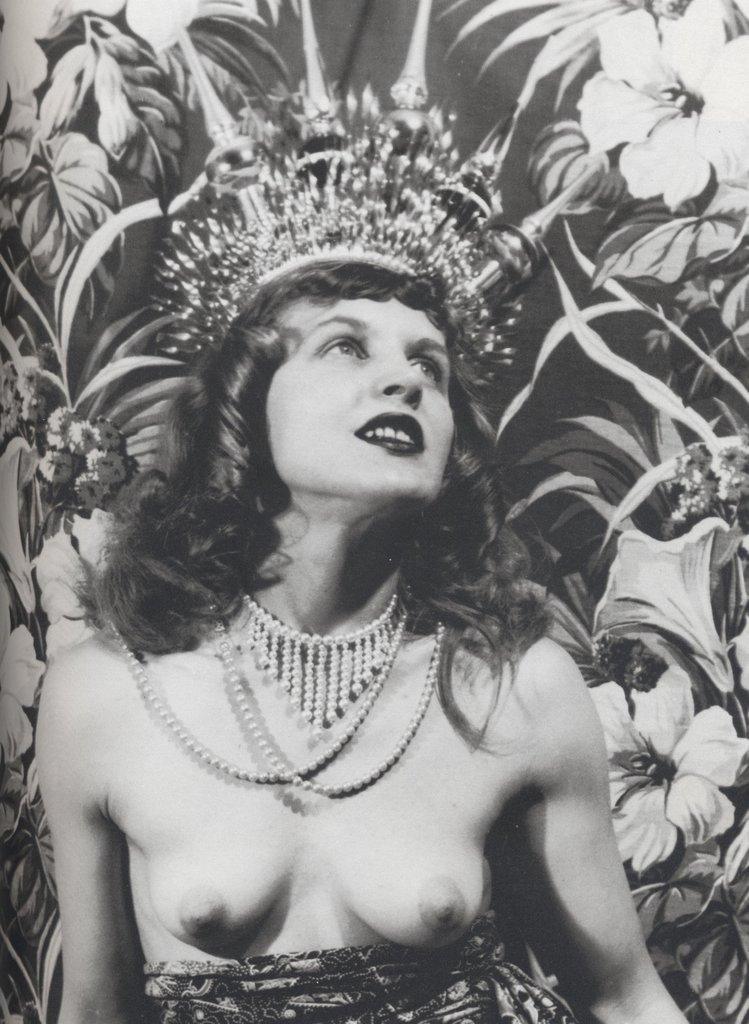
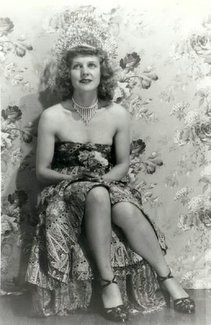
The couple adored each other and during their forty year marriage built a rich fantasy life together. He made crowns and elaborate jewelry for her out of clay he dug himself. He used the bakery oven as a kiln to fire his creations late at night when no one was watching. He also made tiny thrones out of chicken bones painted gold.


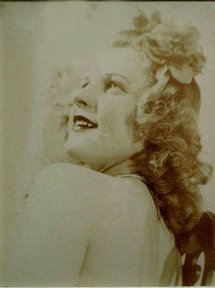
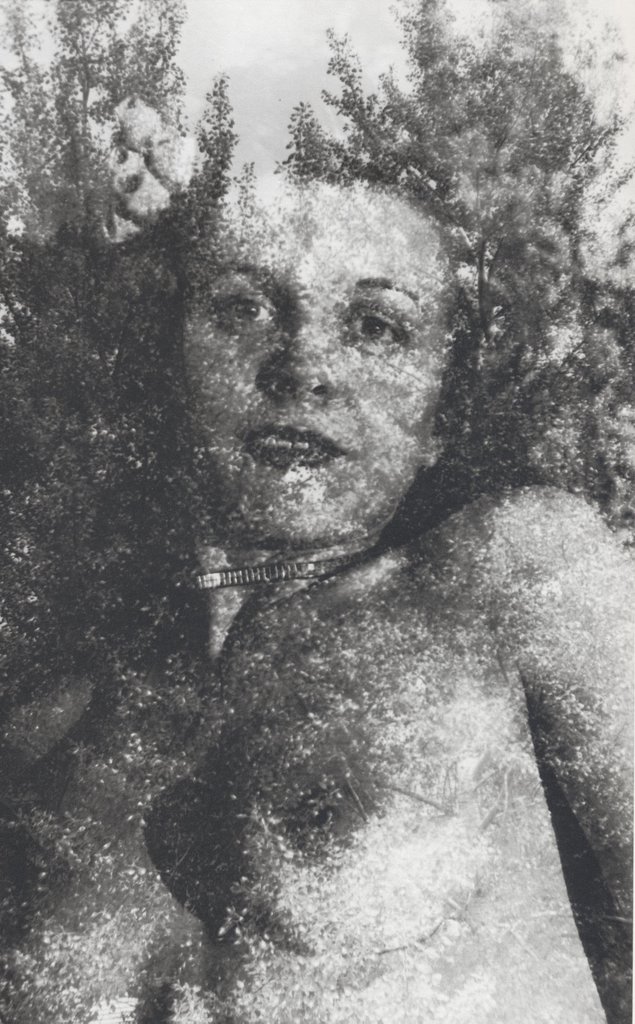
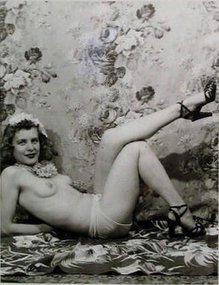
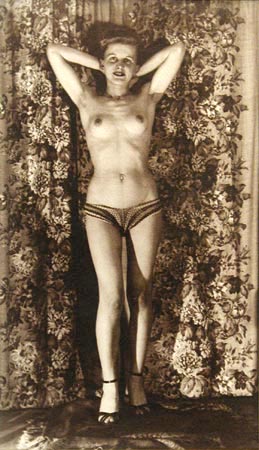
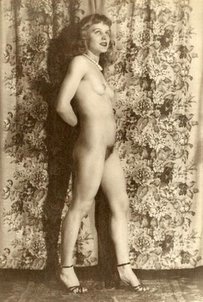
Eugene's paintings and sculptures were quite mediocre. His real artistic accomplishment was that he made several thousand pictures of Marie as his queen, muse, glamour girl, goddess, siren. He would scavenge floral print wallpaper or scraps of fabric to create exotic backdrops. He would adorn her in sarongs and togas and bikinis. Many of these photos he later colored by hand.


Eugene created montages with Marie's face in the sky, in the sun, and in the trees.


I don't imagine that many housewives in Milwaukee during the 1940s and 1950s spent their days posing for their husbands in nothing but a tiara. But then, I don't think that Eugene and Marie ever felt bound by the time and place where they lived. Their love was transcendent.


Eugene's images of Marie remind me of the line by that great poet of love, Walt Whitman,

I will leave all,
and come and make the hymns of you.
Whatever you may think about the song of Eugene von Bruenchenhein, there are definitely worse ways to live.

Read more "ARTISTS IN LOVE, part three..."