Sunday, November 1, 2009

If You Want To Cry

...cry to this.

My Mother, My Son by Mary Frey

And another one, less obvious, but no less gorgeous - Bathroom Landscape:

Every once in a while the question comes back lurking: are there things that are not to be shown? Or rather: not to be worked at? Do you imagine this - a woman standing in the room with a camera, waiting for the right moment so she can take a picture of her son carrying her mother? Hold her up just a bit honey... Just a little more...
And yet, this is one of the most touching pictures I have seen in quite a while.

(via) Read more "If You Want To Cry..."

Zoonoia

From the crazy guys at Koerner Union comes the most original dog portrait of 2008:

...and the most unappealing digital album of 2007 - Ready Made. Which is also an accomplishment of sorts. Read more "Zoonoia..."

Saturday, October 31, 2009

THE BRUSHWORK OF LEONARD STARR: AN APPRECIATION

I was pleased that my last post about working with ink triggered a discussion in the comment section about the great Leonard Starr.

Regular readers know that I am a big admirer of Starr's brilliant draftsmanship in the comic strip On Stage. At regular intervals, I revisit On Stage just to renew my education. In view of the comments from readers, I thought it would be timely to share some inspiring examples of Starr's work with brush and ink.


Starr's no. 3 Winsor & Newton brush gave him more descriptive power than he could have obtained from a pen.

In the following panel, note Starr's elegant brushwork on the crouching figure, especially the brisk contoured shading of his left arm.


The next panel is a good example of the range of delicate applications for a brush in the hands of a talented artist: contrast the freedom of the curls in her hair with the lines of the folds in her nightgown sleeve, and contrast both with how effectively Starr sculpted those hands holding the phone:


Starr knew how to apply heavy inks for dramatic effect:


If anyone knows the whereabouts of the original of this daily strip, I'd love to hear from them.

But the heavy ink never gets out of control. The consummate craftsman, Starr maintains complete balance. In the following daily strip, only one face ever comes out of the shadows but the moonlight on that single dubious face works perfectly, both visually and as stagecraft.


Also, note the woman's upturned head as she offers her lips for a kiss (quite sexy, I thought). Starr gets the tilt just right, and delicately captures the effect of gravity on the back of her hair. You can tell when an artist is using silhouettes to avoid work, and when he really knows what he is doing.

For me, a bonus in Starr's artwork is that he is a master of facial expressions. Look at how he captures the emotion in the face of the loyal old soldier in the last panel...


Or the disappointed bemusement of the woman in the last panel here... not the simplest emotions to depict.


Starr seamlessly combined the strengths of the pen and the brush to create unified pictures of integrity and class.


For me, it defies the laws of physics that Starr was able to write and draw three such panels every day, six days a week, and three times that amount on Sundays.
Today, the medium of the comic strip has evolved and no longer has room for this type of craftsmanship.

The entire wonderful series of On Stage is being reprinted by
Classic Comics Press and I highly recommend it to you. The reprints have now reached the years where Starr really hit his stride. It is truly a pleasure to read.

Read more "THE BRUSHWORK OF LEONARD STARR: AN APPRECIATION..."

Tuesday, October 27, 2009

In A Sentimental Mood


Sonnet 44
If the dull substance of my flesh were thought,
Injurious distance should not stop my way;
For then despite of space I would be brought,
From limits far remote, where thou dost stay.
No matter then although my foot did stand
Upon the farthest earth removed from thee;
For nimble thought can jump both sea and land
As soon as think the place where he would be.
But, ah, thought kills me that I am not thought,
To leap large lengths of miles when thou art gone,
But that, so much of earth and water wrought,
I must attend time's leisure with my moan,
Receiving nought by elements so slow,
But heavy tears, badges of either's woe.

(Shakespeare)


One more thing: The bone in the film is a wishbone:
The wishbone, known in anatomy as the furcula, is a sternum bone found in birds which is shaped like the letter Y. It is used as an attachment point for the wing muscles. It is so named because of a tradition: Two people pull on each side of such a bone, and when it breaks, the one who gets the larger part is said to have a wish granted.

The mechanical sculpture in the film is by Arthur Ganson. Some of his stuff is really awe-inspiring. Check this Machine with Artichoke Petal #2


Of course, it may bring to mind other art machines (Rebecca Horn, but also manyothers), but what I really appreciate here is the simplicity. Modest art is something to be cherished. It also reminds me of some of the musical experiences by the Portuguese musician Nuno Rebelo:


Even the really simple ones are really something: Machine with Chinese Fan


Is it kitsch? I don't care.
(via) Read more "In A Sentimental Mood..."

Monday, October 26, 2009

Workingg

Just so you don't think I'm ignoring you - check out some great projects by Marc Kremers:
  • As found, a site with images found on the net... Fantastic.
  • The wonderfuly anarchist Tex Server.
  • And some of Marc's animations can be found here.
Read more "Workingg..."

Saturday, October 24, 2009

The right and the rights

So how was it for YOU?

Not all of Robert Grigolov's work convinces me. Some of it seems like simple tricks pour épater les bourgeois. But isn't part of the fun about discovering the value something has for you when taking out of a context which isn't necessarily one you appreciate?

Why does the above installation have the title Dollar Bill? I don't know. I have some ideas, but I don't think I want to follow them. And, just as Daniel Pennac's 10 Inalienable Rights of the Reader, so any spectator has similar rights, among them, to decide arbitrarily where the work begins and ends for her.


This doesn't need to mean any sort of glorification of ignorance. However, it does accept it as part of the deal. After all, the spectator is no less free than the artist, is he?


This should be a very obvious question. Aesthetic relativism is something seemingly accepted. Yet the contemporary art world seems to specialize in "right" ways of looking at its creations.
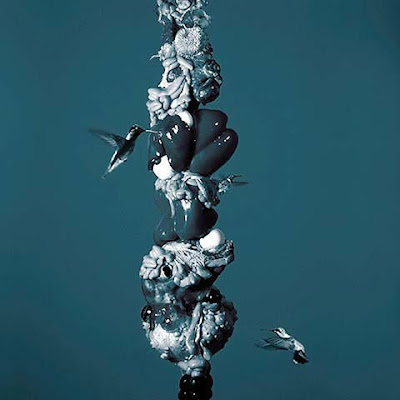
Anything goes - yet there is still plenty of exciting space for dialogue. Tastes are indeed something we discuss and shape, aesthetic experience is a beautifuly shapeable thing. And yet one of the most difficult things is to stay within the play of common value-seeking and exploration of personal experience, and not move into the discourse of competence, the universe of authority, which might sustain a big chunk of what the contemporary art world is about, but is hardly enjoyable for those of us who like their artflesh stupendously raw and intimate.
(via) Read more "The right and the rights..."

Wednesday, October 21, 2009

Watch your back


Oh what jealousy of the physical difference! Of the outcasting cast out in flesh! Oh how simple the definitions then become. How meaningful in their ever-presence. What sort of a tragedy can there be when its shape is nothing? How do you give it shape? How do you translate it into something it is not?

All pictures are by Risk Hazekamp. Read more "Watch your back..."